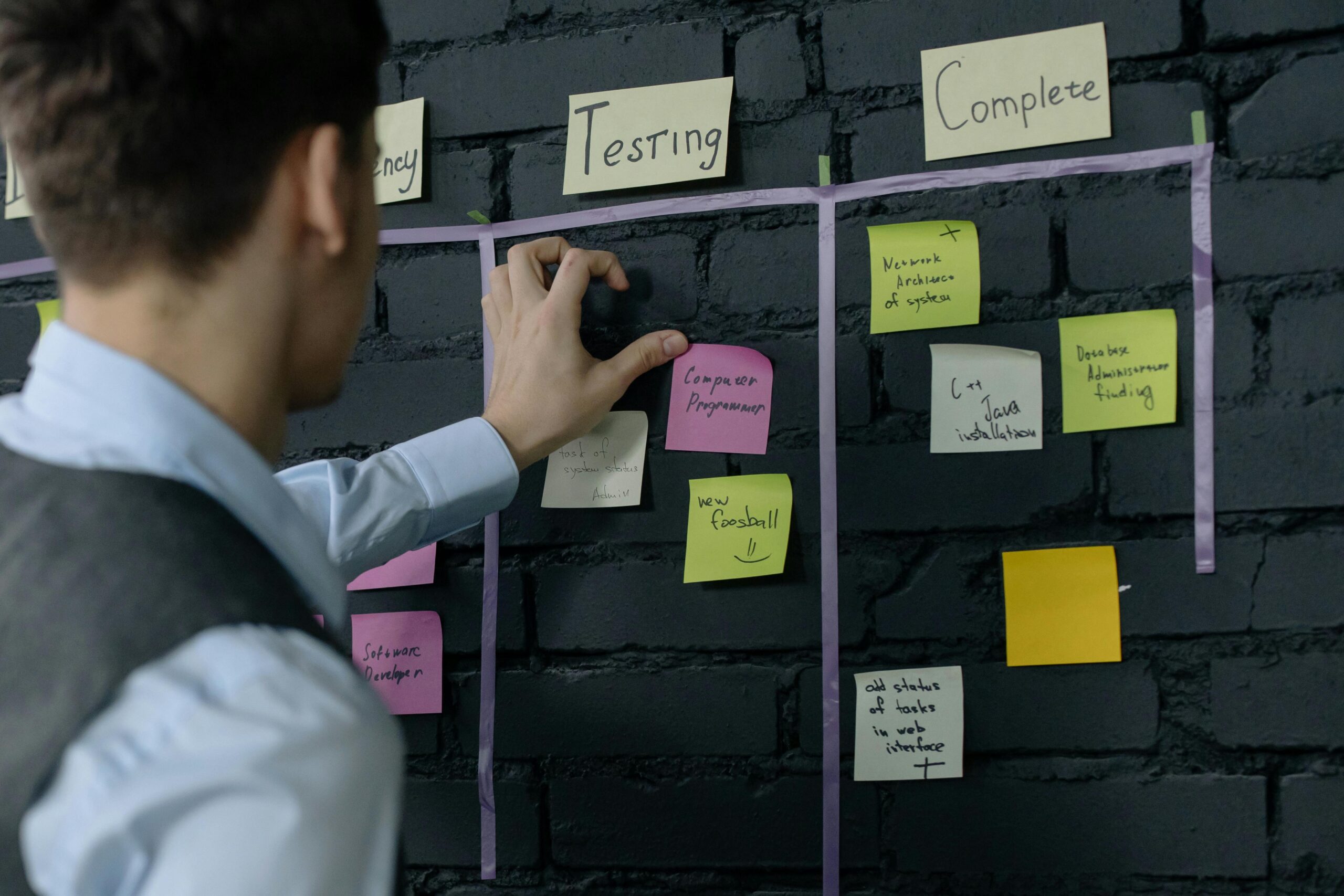
Success isn’t about avoiding failure—it’s about mastering execution despite obstacles. This comprehensive guide reveals proven strategies to build failure-resistant systems that propel you toward unstoppable achievement.

🎯 Understanding Failure-Resistant Execution: The Foundation of Lasting Success
Failure-resistant execution represents a paradigm shift in how we approach goals and challenges. Rather than viewing failure as the opposite of success, this methodology treats setbacks as data points that inform better decision-making. The most successful individuals and organizations don’t experience fewer obstacles—they’ve simply developed superior systems for navigating them.
At its core, failure-resistant execution involves creating processes, mindsets, and frameworks that continue functioning even when individual attempts fall short. This approach acknowledges that perfection is impossible but progress is always achievable. By building redundancy, flexibility, and learning mechanisms into your execution strategy, you create an antifragile system that actually grows stronger through adversity.
The traditional success narrative often glorifies overnight breakthroughs while ignoring the countless iterations, adjustments, and recoveries that preceded them. Failure-resistant execution embraces this reality by designing systems that expect setbacks and transform them into stepping stones rather than roadblocks.
💡 The Psychology Behind Unstoppable Momentum
Your mindset forms the bedrock of failure-resistant execution. Carol Dweck’s research on growth mindset versus fixed mindset demonstrates that believing abilities can be developed through dedication creates resilience against setbacks. People with growth mindsets view challenges as opportunities to expand their capabilities rather than tests of their inherent worth.
Neuroplasticity research confirms that our brains physically restructure themselves based on repeated thoughts and actions. When you consistently interpret obstacles as temporary and specific rather than permanent and pervasive, you literally rewire your neural pathways to support resilience. This biological foundation means that failure-resistant thinking isn’t just motivational rhetoric—it’s neuroscience in action.
The concept of “productive failure” has gained traction in educational psychology. Studies show that struggling with problems before receiving instruction leads to deeper learning than being taught solutions immediately. This counterintuitive finding reveals that our discomfort with failure may actually prevent the cognitive struggle necessary for mastery.
Reframing Setbacks as Strategic Intelligence
Every obstacle contains information about the gap between your current approach and what actually works. The key lies in extracting this intelligence systematically rather than emotionally. When execution fails, ask three critical questions: What assumptions proved incorrect? Which variables did I underestimate? What unexpected factors emerged that I can now incorporate into future planning?
This analytical approach transforms emotional reactions into strategic assessments. Instead of personalizing failure (“I’m not good enough”), you operationalize it (“This approach didn’t work under these conditions”). This subtle linguistic shift creates psychological distance that enables clearer thinking and faster adaptation.
🔧 Building Your Failure-Resistant Execution System
Effective execution systems share common characteristics: they’re specific, measurable, adaptable, and include built-in feedback loops. The following framework provides a practical structure for creating your own failure-resistant approach.
The Pre-Mortem Strategy
Before launching any significant initiative, conduct a pre-mortem analysis. Unlike post-mortems that examine what went wrong after failure, pre-mortems imagine failure before it happens. Gather your team or sit alone with a notepad and assume your project has failed spectacularly. Now work backward to identify all possible reasons why.
This exercise accomplishes two critical objectives. First, it surfaces hidden risks and assumptions that optimism bias might otherwise obscure. Second, it emotionally prepares you for potential obstacles, reducing the shock and paralysis that often accompanies unexpected setbacks. When challenges arise that you’ve already mentally rehearsed, you respond with preparation rather than panic.
Milestone-Based Execution Over Deadline-Driven Approaches
Traditional project management often focuses on time-based deadlines: complete task X by date Y. While timelines provide structure, they also create binary success/failure scenarios that ignore the complex, non-linear nature of meaningful achievement.
Milestone-based execution instead focuses on achieving specific outcomes regardless of timeline. This approach recognizes that some obstacles require more time to navigate than anticipated, but what matters is reaching each milestone with quality intact. By decoupling achievement from arbitrary dates, you reduce the pressure that causes rushed work and compounding errors.
Create a milestone map with clearly defined success criteria for each stage. When you reach a milestone slower than planned, analyze why without self-judgment. This data informs more accurate planning for subsequent milestones, creating a self-improving system over time.
⚡ The Power of Modular Design in Execution
One of the most powerful failure-resistant strategies involves breaking large goals into modular components that can succeed or fail independently. This approach, borrowed from engineering and software development, ensures that setbacks in one area don’t cascade into total system failure.
Consider a business launch. Instead of betting everything on a single grand opening, test individual components separately: product-market fit through surveys, pricing through limited offers, marketing channels through small campaigns, and operational capacity through soft launches. Each module provides feedback without risking the entire venture.
This modular approach creates multiple small feedback loops instead of one large, late-stage evaluation. You discover what works and what doesn’t while still retaining the flexibility to pivot. Failures become contained experiments rather than existential threats.
Implementing Redundancy Where It Matters Most
Critical systems require backup plans. Identify the single points of failure in your execution strategy—elements where a single problem stops everything. These might include key personnel, critical technologies, essential partnerships, or irreplaceable resources.
For each single point of failure, create redundancy. This doesn’t mean duplicating everything, which wastes resources. Instead, focus redundancy on your most vulnerable critical paths. If one supplier controls an essential component, develop a relationship with a backup. If one person holds crucial knowledge, document their processes and cross-train others.
📊 Metrics That Drive Failure-Resistant Execution
What gets measured gets managed, but measuring the wrong things creates false confidence or unwarranted despair. Failure-resistant execution requires tracking both outcome metrics and process metrics, with particular attention to leading indicators that predict future success or failure.
| Metric Type | What It Measures | Execution Value |
|---|---|---|
| Outcome Metrics | Final results achieved | Confirms whether strategy worked |
| Process Metrics | Quality of execution activities | Identifies where breakdowns occur |
| Leading Indicators | Early signals of future performance | Enables proactive adjustment |
| Learning Metrics | Rate of adaptation and improvement | Tracks system evolution over time |
Leading indicators deserve special attention because they provide early warning systems. If you’re launching a product, leading indicators might include engagement rates during beta testing, percentage of users completing onboarding, or frequency of repeat usage. These metrics predict future success before sales numbers confirm it, giving you time to adjust course.
The Weekly Execution Review Protocol
Implement a weekly review process that evaluates both progress and process. Dedicate 30-60 minutes each week to assess what moved forward, what stalled, and why. This regular cadence prevents small issues from becoming major obstacles while reinforcing what’s working well.
During your review, answer these questions: Which actions created the most progress toward milestones? What obstacles emerged and how were they addressed? What patterns are developing in both successes and setbacks? What adjustments will improve next week’s execution?
🚀 Accelerating Through Obstacles: Advanced Execution Techniques
Once you’ve built fundamental failure-resistant systems, advanced techniques can accelerate your progress even in challenging conditions. These strategies leverage psychological principles and tactical frameworks that high performers across industries employ consistently.
The Two-Hour Solution Sprint
When facing a significant obstacle, resist the urge to brainstorm indefinitely. Instead, set a timer for two hours and commit to generating a working prototype solution before time expires. This constraint forces creative problem-solving and prevents analysis paralysis.
The solution doesn’t need to be perfect—it needs to be testable. A rough prototype that you can evaluate provides more valuable information than endless theorizing. Even if your two-hour solution fails, you’ve gathered data about what doesn’t work, which narrows the solution space for your next attempt.
Implementing the 70% Rule for Decision-Making
Perfectionism masquerades as conscientiousness but often creates execution paralysis. Jeff Bezos famously advocates making most decisions when you have 70% of the information you wish you had. Waiting for complete certainty means competitors act while you deliberate, and changing circumstances invalidate your carefully gathered data.
The 70% rule acknowledges that most decisions are reversible or adjustable. Make the call with good-enough information, then adjust based on results. This bias toward action generates momentum and real-world feedback faster than extended planning ever could.
🛡️ Building Emotional Resilience for Long-Term Execution
Sustainable execution requires emotional resilience—the capacity to maintain effort and optimism despite setbacks. Unlike temporary motivation, resilience represents a stable psychological resource you can develop systematically.
Research in positive psychology identifies several practices that build resilience: maintaining strong social connections who provide support during difficulties, practicing gratitude to maintain perspective on progress rather than fixating on setbacks, engaging in regular physical activity that regulates stress hormones, and cultivating a sense of purpose larger than immediate obstacles.
The Confidence-Competence Loop
Confidence and competence form a reinforcing cycle. Taking action builds competence through experience, which increases confidence, which encourages more ambitious action. Understanding this loop helps you bootstrap resilience even when starting from low confidence.
Begin with small actions within your current capability. These “low-risk reps” build competence without requiring confidence you don’t yet possess. As small successes accumulate, confidence naturally increases, enabling slightly more challenging actions. This gradual escalation creates durable resilience rather than fragile bravado that shatters at the first major obstacle.
🎓 Learning Systems That Compound Over Time
Perhaps the most powerful aspect of failure-resistant execution is its compounding nature. Each obstacle navigated doesn’t just get you closer to one goal—it builds transferable capabilities that accelerate all future execution.
Create a personal knowledge management system to capture lessons from both successes and failures. This might be a digital notebook, voice memos, or video journal—format matters less than consistency. After completing projects or navigating significant challenges, document what you learned in three categories:
- Technical lessons: specific methods, tools, or approaches that proved effective or ineffective
- Strategic lessons: higher-level insights about planning, resource allocation, or sequencing
- Personal lessons: discoveries about your work patterns, energy management, or decision-making tendencies
This practice transforms experience into wisdom. Without documentation, valuable lessons fade into vague impressions. With systematic capture, each challenge becomes an investment in your future execution capability.
🌟 From Strategy to Reality: Your 30-Day Implementation Plan
Knowledge without implementation remains theoretical. To transform these strategies into failure-resistant execution capability, commit to a structured 30-day practice period. This timeframe is long enough to establish new habits but short enough to maintain focus.
Week one: Implement your weekly review protocol and conduct a pre-mortem for your most important current goal. Week two: Break your primary objective into modular components and establish metrics for each. Week three: Practice the two-hour solution sprint on your biggest current obstacle and implement the 70% decision rule for three decisions. Week four: Create your personal knowledge management system and document lessons from the previous three weeks.
By the end of 30 days, you’ll have practical experience with each major component of failure-resistant execution. More importantly, you’ll have real results demonstrating which elements work best for your specific situation and style.

🔄 Continuous Evolution: Your Execution System as a Living Framework
The final principle of failure-resistant execution is perhaps the most important: your system should evolve continuously based on results. What works in one context or life stage may need adjustment as circumstances change. Regularly evaluate not just your progress toward goals but the effectiveness of your execution system itself.
Every quarter, assess your execution framework: Which elements consistently generate progress? Which feel like overhead without proportional benefit? What new challenges require new capabilities? This meta-level review ensures your system remains optimized rather than calcifying into rigid dogma.
Success isn’t a destination you reach through perfect execution—it’s a direction you maintain through failure-resistant systems that keep you moving forward regardless of obstacles. By implementing the strategies outlined here, you build not just toward specific goals but toward a fundamentally more capable version of yourself. Each challenge navigated expands your capacity to handle future challenges, creating an upward spiral of increasing capability and achievement.
The path to unstoppable success doesn’t avoid failure—it runs straight through it, equipped with systems that transform every setback into strategic intelligence and every obstacle into an opportunity for growth. Your journey begins not when conditions are perfect but when you commit to execution that resists failure through preparation, adaptability, and relentless forward momentum.