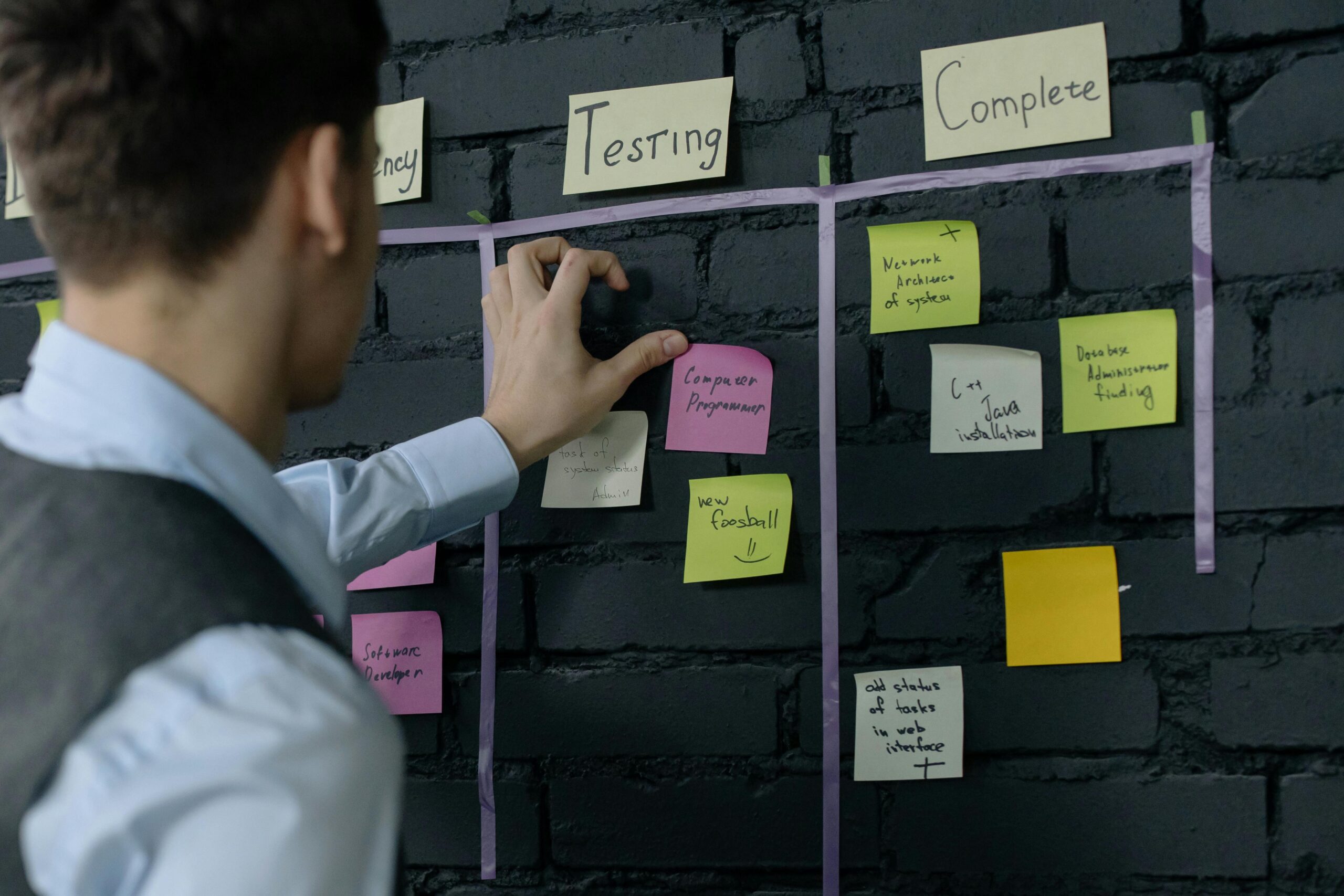
In a world overflowing with choices, the ability to make decisions systematically separates high achievers from those constantly overwhelmed by uncertainty and regret.

Every day, we face countless decisions—from trivial choices like what to eat for breakfast to life-altering ones like career changes or investment opportunities. The quality of these decisions directly impacts our productivity, relationships, financial health, and overall success. Yet most people approach decision-making haphazardly, relying on gut feelings, emotional impulses, or outdated mental models that lead to inconsistent results.
Systemized decision-making transforms this chaotic process into a structured, repeatable framework that delivers consistent, high-quality outcomes. By implementing proven methodologies and eliminating cognitive biases, you can dramatically improve the precision of your choices while reducing the mental energy required to make them. This approach isn’t about removing intuition entirely—it’s about channeling your natural intelligence through frameworks that amplify its effectiveness.
🎯 Why Traditional Decision-Making Falls Short
Most people believe they’re rational decision-makers, but cognitive science reveals a different story. Our brains evolved to make quick survival decisions in environments vastly different from modern life. The mental shortcuts that once kept our ancestors alive now sabotage our ability to navigate complex professional and personal landscapes.
Common pitfalls include confirmation bias, where we seek information that supports pre-existing beliefs while dismissing contradictory evidence. The sunk cost fallacy keeps us committed to failing projects simply because we’ve already invested time or money. Availability bias causes us to overweight recent or memorable events when estimating probabilities. Anchoring effects trap us to initial information, even when irrelevant.
These cognitive distortions operate beneath conscious awareness, silently degrading decision quality. Without systematic approaches to counteract them, even intelligent, well-intentioned people make predictably poor choices. The good news? Once you understand these patterns, you can implement systems designed to neutralize their impact.
The Foundation: Clarity Before Choice
The first principle of systemized decision-making is achieving absolute clarity about what you’re actually deciding. This sounds obvious, yet most decision paralysis stems from poorly defined problems. Before evaluating options, you must crystallize the core question you’re answering.
Start by writing out the decision in simple language. What exactly are you trying to achieve? What constraints exist? What would constitute a successful outcome? This exercise alone eliminates much of the confusion that clouds judgment. Vague decisions like “Should I change careers?” become more tractable when reframed as “Should I transition from marketing to product management within the next six months to increase job satisfaction and earning potential?”
Next, identify your true decision criteria—the factors that actually matter for this specific choice. Different decisions require different evaluation frameworks. A hiring decision might prioritize skills, cultural fit, and growth potential, while a vendor selection might emphasize cost, reliability, and integration capabilities. Explicitly listing these criteria prevents important factors from being overlooked while keeping irrelevant considerations from muddying the waters.
Creating Your Decision Framework Template
Develop a standardized template for recurring decision types. This eliminates the need to reinvent your approach each time similar situations arise. A personal investment decision template might include sections for risk assessment, time horizon, liquidity needs, tax implications, and alignment with overall financial goals.
Document these templates in an easily accessible format—whether that’s a digital note-taking system, spreadsheet, or dedicated decision journal. Over time, you’ll refine these frameworks based on actual outcomes, creating increasingly sophisticated tools tailored to your specific circumstances and priorities.
⚖️ The Power of Weighted Scoring Systems
One of the most practical systemized approaches involves weighted scoring matrices. This method quantifies subjective judgments, making trade-offs explicit and comparable. Here’s how it works: list all viable options, assign importance weights to your decision criteria, then score each option against each criterion.
For example, when choosing between job offers, you might weight salary at 25%, work-life balance at 30%, growth opportunities at 25%, company culture at 15%, and commute at 5%. Each job receives a score from 1-10 on each criterion. Multiply the scores by the weights, sum them up, and the highest total indicates the optimal choice according to your values.
This approach doesn’t eliminate judgment—you’re still assessing scores and weights subjectively—but it forces you to be systematic and transparent about those judgments. It also reveals when decisions are close calls, suggesting that either option is acceptable, which itself reduces anxiety.
| Criterion | Weight | Option A Score | Option A Weighted | Option B Score | Option B Weighted |
|---|---|---|---|---|---|
| Salary | 25% | 7 | 1.75 | 9 | 2.25 |
| Work-Life Balance | 30% | 9 | 2.70 | 6 | 1.80 |
| Growth Opportunities | 25% | 8 | 2.00 | 7 | 1.75 |
| Company Culture | 15% | 8 | 1.20 | 8 | 1.20 |
| Commute | 5% | 6 | 0.30 | 8 | 0.40 |
| Total | 100% | 7.95 | 7.40 |
Decision Trees: Mapping Complex Pathways
When decisions involve sequences of choices or uncertain outcomes, decision trees provide visual clarity. These diagrams map out different paths, showing how initial choices lead to subsequent decision points and potential results. This technique is particularly valuable for strategic business decisions, project planning, and any scenario where timing matters.
Start with your initial decision point as the root node. Branch out to represent each possible choice. From each choice, create additional branches for probable outcomes or subsequent decisions. Assign probabilities and values to different paths where possible. This visualization reveals which initial choices preserve the most valuable future options—a concept known as preserving optionality.
Decision trees also help identify “no-regret moves”—choices that position you well regardless of how uncertainties resolve. In career planning, for instance, developing transferable skills might be a no-regret move because it creates value across multiple future scenarios, whereas highly specialized training might only pay off in specific circumstances.
🧠 Leveraging Mental Models and First Principles
Master decision-makers accumulate mental models—frameworks for understanding how systems work. Charlie Munger famously advocates for developing a “latticework of mental models” drawn from multiple disciplines. These models serve as thinking tools that illuminate different aspects of complex problems.
The concept of opportunity cost, borrowed from economics, reminds us that choosing one option means forgoing alternatives. Understanding compound effects helps predict how small advantages accumulate exponentially over time. Recognizing feedback loops reveals how actions can reinforce or counteract themselves. Each mental model adds another dimension to your decision-making capability.
First principles thinking complements this approach by breaking complex problems down to fundamental truths, then reasoning up from there. Instead of reasoning by analogy (“We’ve always done it this way”), you question assumptions and rebuild understanding from the ground up. Elon Musk used this approach when developing cheaper rockets, challenging industry assumptions about manufacturing costs by examining raw material expenses.
Building Your Mental Model Library
Systematically expand your mental model collection by studying diverse fields—psychology, economics, physics, biology, systems thinking, and statistics all offer valuable frameworks. Read widely, take notes on useful concepts, and consciously practice applying these models to real situations you encounter.
Create a personal reference document listing your most valuable models with brief explanations and example applications. Review this periodically, especially before major decisions, to ensure you’re considering multiple perspectives rather than defaulting to familiar patterns.
The Pre-Mortem: Failure-Proofing Your Decisions
One of the most powerful systemized techniques is the pre-mortem exercise, developed by psychologist Gary Klein. Unlike a post-mortem that analyzes why something failed after the fact, a pre-mortem imagines failure in advance to prevent it.
Here’s the process: Assume your decision has been implemented and has failed spectacularly. Now work backward to identify what went wrong. This mental time-travel bypasses the optimism bias that typically blinds us to risks. Team members who might hesitate to voice concerns about a favored plan find it easier to critique a hypothetical failure.
The pre-mortem surfaces overlooked vulnerabilities, untested assumptions, and implementation challenges that rosy projections miss. It transforms vague unease into specific risks you can address through contingency planning or decision modification. Companies using pre-mortems consistently identify issues that conventional risk analysis overlooks.
📊 Data-Informed Decision-Making Without Analysis Paralysis
Systemized decision-making leverages data without falling into the trap of endless analysis. The key is determining the appropriate level of information for each decision’s stakes and reversibility. Jeff Bezos distinguishes between Type 1 decisions (consequential and irreversible) and Type 2 decisions (easily reversible), advocating different approaches for each.
For Type 1 decisions, invest in thorough research and diverse perspectives. For Type 2 decisions, gather minimal sufficient information, decide quickly, and adjust based on results. Most decisions are Type 2, yet people treat them like Type 1, wasting valuable time and energy.
Establish decision deadlines based on when additional information would genuinely change your choice. If you’re 70% confident and further research would take weeks to reach 75% confidence, the marginal value rarely justifies the delay. Set a date, gather information until then, and commit to deciding with whatever data you have.
Creating Decision Dashboards
For recurring business or personal decisions, develop dashboards that track relevant metrics over time. These might include financial indicators, health metrics, productivity measures, or relationship satisfaction scores. Regular review of these dashboards reveals trends and triggers decisions before situations become critical.
Dashboard tools range from simple spreadsheets to sophisticated business intelligence platforms. The sophistication should match the decision’s importance and data complexity. What matters most is consistency—regularly updating and reviewing the information that drives your key choices.
Building Decision-Making Rituals and Routines
Systemized decision-making becomes most powerful when embedded in regular routines. Establish specific times for different decision types—weekly reviews for operational choices, quarterly assessments for strategic direction, annual evaluations for life priorities. This temporal structure ensures important decisions receive attention rather than being crowded out by urgent trivia.
Create environmental cues that trigger systematic thinking. A dedicated decision-making space, whether physical or digital, signals your brain to engage deliberate, structured thought rather than reactive judgment. Some executives maintain “decision journals” where they record major choices along with their reasoning, expected outcomes, and actual results—creating a personal feedback loop that continuously improves judgment.
Morning routines might include reviewing your priority hierarchy to ensure daily choices align with long-term goals. Evening reflections could assess whether the day’s decisions reflected your values or were driven by external pressures and emotional reactions. These rituals transform decision-making from a sporadic, stressful event into an integrated life skill.
🚀 Accelerating Implementation: From Choice to Action
The best decision poorly implemented delivers worse results than a mediocre decision executed excellently. Systemized decision-making includes structured implementation planning. Once you’ve made a choice, immediately define the first three concrete actions required to move forward, assign deadlines, and schedule them.
This prevents the common pattern where decisions fade into intentions without producing change. Converting decisions into calendar commitments and task lists creates accountability and momentum. Implementation intentions—specific “if-then” plans—dramatically increase follow-through rates compared to general commitments.
Track decision implementation alongside decision quality. Your decision journal should note not just what you decided, but whether you executed as planned and what obstacles arose. This reveals whether your challenges stem from poor choices or implementation failures—each requiring different solutions.
Continuous Improvement Through Decision Audits
Elite decision-makers treat their process as a continuously evolving system rather than a fixed methodology. Schedule regular decision audits—quarterly or annually—to review major choices, compare expected versus actual outcomes, and identify patterns in your successes and failures.
Which types of decisions do you consistently handle well? Where do you repeatedly struggle? Are certain cognitive biases particularly problematic for you? Do you gather too much information or too little? These insights allow targeted improvements to your personal decision-making system.
Consider keeping a “lessons learned” document where you record decision post-mortems—what worked, what didn’t, and what you’d do differently next time. This institutional memory prevents repeating mistakes and compounds successful strategies over time. The goal isn’t perfect decisions—that’s impossible in an uncertain world—but rather a consistently improving decision-making capability.
💡 Integrating Technology Into Your Decision System
Modern technology offers powerful tools for systemized decision-making. Spreadsheet templates can encode your weighted scoring frameworks for instant calculation. Project management apps help track implementation. Note-taking systems organize research and capture decision rationale. Calendar apps ensure decisions receive scheduled attention rather than falling through cracks.
Dedicated decision-making applications provide structured frameworks, prompt relevant questions, and maintain decision histories. These tools don’t replace judgment but systematize the process around your judgment, ensuring consistency and completeness. The key is choosing tools that reduce friction rather than adding complexity—the best system is one you’ll actually use.
Artificial intelligence increasingly augments human decision-making by processing vast datasets, identifying patterns, and highlighting overlooked factors. However, AI works best as a decision support system rather than a replacement for human judgment, particularly for choices involving values, ethics, and novel situations where historical data provides limited guidance.
Balancing System and Intuition
Systemized decision-making doesn’t mean abandoning intuition—it means understanding when to trust it. Intuition represents pattern recognition developed through experience. In domains where you have genuine expertise and immediate feedback, intuitive judgments can be remarkably accurate. A chess master’s intuitive sense of strong positions reflects thousands of games analyzed.
However, intuition fails in environments with delayed feedback, random outcomes, or no repeated experience. Your gut feeling about stock market movements probably reflects cognitive bias rather than genuine insight unless you’re an experienced trader with a proven track record. The system helps distinguish between domains where intuition serves you and where it misleads you.
The most effective approach uses systematic frameworks to structure the decision space, gather relevant information, and identify key considerations—then allows intuition to integrate these factors into a holistic judgment. This combines analytical rigor with the synthesizing power of unconscious processing.

🎓 The Compounding Returns of Decision Excellence
Perhaps the most compelling reason to master systemized decision-making is its compounding nature. Each improved decision creates slightly better outcomes, which position you for better future choices, which generate even better results. Over years and decades, this compounding effect creates dramatic differences in life trajectories.
Someone who makes decisions just 10% better than average—through systematic frameworks, reduced bias, and better implementation—will experience exponentially superior outcomes over time. Better health decisions compound into vitality. Better financial choices compound into security. Better relationship decisions compound into deeper connections. Better career choices compound into impact and fulfillment.
The beautiful aspect of this approach is that it’s entirely within your control. You can’t control outcomes—randomness and external factors always play a role—but you can control your decision process. By focusing on systematizing and continuously improving how you make choices rather than obsessing over results, you develop a reliable competitive advantage applicable across every domain of life.
Start small. Choose one decision framework from this article and apply it to a current choice you’re facing. Notice how the structure reduces anxiety and clarifies thinking. Refine the approach based on results. Gradually expand your decision-making toolkit, building systems for the choice patterns that recur in your life. Over time, what initially requires conscious effort becomes second nature—systematized excellence becomes your default mode of operation.
The quality of your life ultimately reflects the quality of your decisions. By mastering systemized decision-making, you transform this fundamental skill from a source of stress and inconsistency into a reliable engine for efficiency, precision, and sustained success. The frameworks exist. The methodologies are proven. The only remaining decision is whether you’ll commit to making better decisions—and that choice is entirely yours to make.