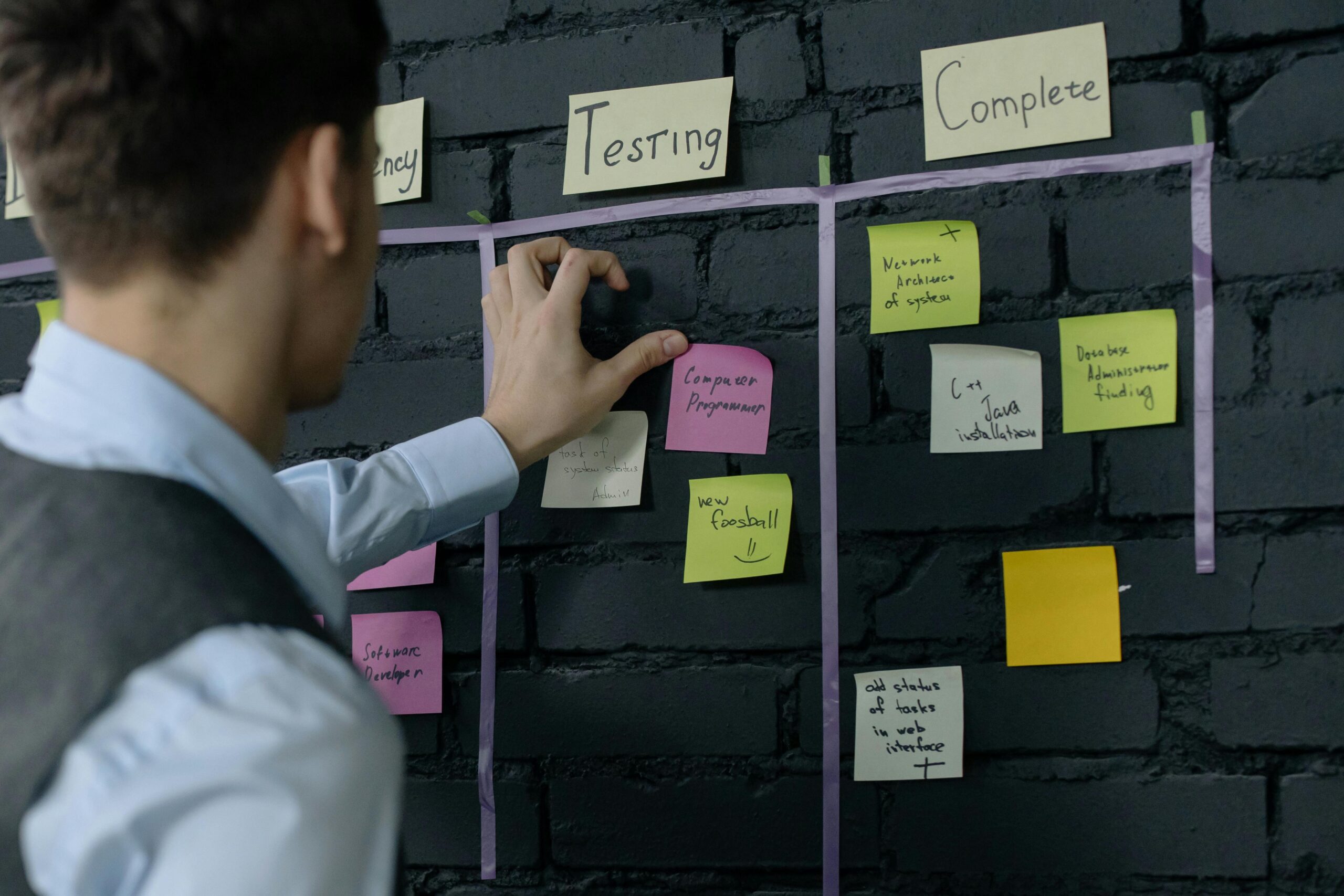
Task-to-outcome alignment is the cornerstone of organizational success, connecting daily activities with strategic objectives to maximize productivity, minimize waste, and accelerate goal achievement.

In today’s fast-paced business environment, organizations face a critical challenge: teams work tirelessly, yet results often fall short of expectations. The disconnect isn’t typically due to lack of effort or talent—it stems from misalignment between what people do and what the organization needs to achieve. This fundamental gap costs businesses billions annually in wasted resources, missed opportunities, and unrealized potential.
Understanding and implementing task-to-outcome alignment transforms how organizations operate. It creates a direct line of sight from individual activities to strategic goals, ensuring every action contributes meaningfully to desired results. This approach doesn’t just improve efficiency—it revolutionizes how teams think about work, make decisions, and prioritize their efforts.
🎯 Understanding the Task-to-Outcome Framework
Task-to-outcome alignment represents a methodical approach to connecting tactical execution with strategic vision. At its core, this framework ensures that every task performed within an organization has a clear purpose and measurable contribution to broader objectives.
The framework operates on three fundamental levels. First, strategic outcomes define what success looks like for the organization—market position, revenue targets, customer satisfaction metrics, or innovation benchmarks. Second, tactical objectives break these outcomes into achievable milestones that teams can pursue over shorter timeframes. Third, operational tasks represent the daily activities and deliverables that collectively drive progress toward those objectives.
The power of this alignment lies in its bidirectional nature. Not only do tasks roll up to support outcomes, but outcomes inform which tasks deserve attention and resources. This creates a dynamic system where priorities become self-evident and decision-making becomes dramatically more straightforward.
The Cost of Misalignment
Organizations that operate without clear task-to-outcome alignment experience predictable symptoms. Teams work on initiatives that feel productive but don’t move critical metrics. Meetings proliferate without driving decisions. Projects consume resources without delivering meaningful returns. According to research, misaligned organizations waste up to 40% of productive capacity on activities that don’t contribute to strategic goals.
This misalignment creates frustration at every level. Leadership wonders why ambitious strategies don’t translate into results. Middle management struggles to prioritize competing demands. Individual contributors feel disconnected from the organization’s purpose, leading to disengagement and turnover.
Building Your Alignment Infrastructure
Establishing robust task-to-outcome alignment requires deliberate infrastructure—systems, processes, and tools that make alignment visible, measurable, and actionable. This infrastructure doesn’t need to be complex, but it must be consistent and comprehensive.
Start by creating a clear outcome hierarchy. Document your strategic objectives in specific, measurable terms. Avoid vague aspirations like “improve customer experience” in favor of concrete targets such as “increase Net Promoter Score from 45 to 60 by Q4.” This specificity provides the foundation for meaningful alignment.
Next, establish mapping protocols that connect every significant initiative and ongoing process to strategic outcomes. This mapping shouldn’t be a one-time exercise but an ongoing practice integrated into project planning, resource allocation, and performance management.
Creating Visibility Systems
Alignment requires visibility. Team members need to see how their work connects to larger goals, and leaders need transparency into whether resources are focused on what matters most. Modern project management and collaboration tools can facilitate this visibility, providing dashboards and tracking mechanisms that illuminate these connections.
Visual frameworks like strategy maps, OKR (Objectives and Key Results) hierarchies, and value stream diagrams help make abstract alignments concrete. These tools transform alignment from a theoretical concept into something teams can see, discuss, and adjust in real-time.
📊 Implementing Practical Alignment Techniques
Theory becomes valuable only when translated into practice. Several proven techniques enable organizations to operationalize task-to-outcome alignment effectively.
The “five whys” technique helps establish clear connections between tasks and outcomes. When someone proposes an activity, ask why it matters. When they answer, ask why that matters. Continue this process until you reach a strategic outcome. If you can’t complete this chain, the task’s value becomes questionable.
Regular alignment audits provide another powerful technique. Quarterly, review your team’s time allocation and compare it against strategic priorities. Are you investing 30% of resources in an area that represents only 5% of strategic importance? These audits reveal misalignments that gradually accumulate as organizations evolve.
Priority Scoring Frameworks
Systematic priority scoring brings objectivity to resource allocation decisions. Create scoring criteria based on strategic alignment, potential impact, resource requirements, and risk factors. Evaluate every significant initiative against these criteria, generating numerical scores that facilitate comparison and prioritization.
This approach doesn’t eliminate judgment—it enhances it. Scores provide a starting point for informed discussions rather than definitive answers. The framework ensures that alignment considerations explicitly inform every prioritization decision.
Overcoming Common Alignment Obstacles
Even organizations committed to alignment encounter predictable challenges. Recognizing these obstacles enables proactive mitigation strategies.
The “urgent versus important” trap represents perhaps the most common obstacle. Urgent tasks generate immediate pressure, demanding attention regardless of strategic importance. Without deliberate countermeasures, urgent-but-unimportant activities crowd out important-but-less-urgent work that drives strategic outcomes.
Combat this trap by creating protected time for strategic priorities. Block calendars for high-alignment work before reactive demands consume available capacity. Establish team norms that treat strategic work with the same urgency as firefighting activities.
Managing Organizational Complexity
As organizations grow, alignment becomes exponentially more challenging. Multiple departments pursue different priorities, creating competition for resources and attention. Cross-functional dependencies multiply, making it difficult to maintain clear lines of sight from tasks to outcomes.
Address complexity through rigorous governance structures. Establish clear decision rights regarding resource allocation. Create forums where leaders negotiate priorities based on strategic impact rather than political influence. Implement transparent criteria for evaluating competing proposals.
Technology platforms can also help manage complexity. Integrated systems that connect strategic planning, project management, and resource allocation provide the unified view necessary for maintaining alignment at scale.
💡 Cultivating an Alignment-Focused Culture
Sustainable alignment transcends processes and tools—it requires cultural transformation. Organizations with strong alignment cultures think and behave differently than their misaligned counterparts.
In alignment-focused cultures, “why” questions aren’t seen as challenging but as essential. Team members routinely examine the connection between their activities and organizational outcomes. Leaders model this behavior by explaining the strategic rationale behind decisions and welcoming questions about priorities.
These cultures also embrace saying “no.” They recognize that focus requires selectivity, and that pursuing too many initiatives guarantees mediocre results across all of them. Permission to decline or deprioritize activities that don’t align with strategic outcomes empowers teams to protect their focus.
Recognition and Reinforcement
What gets recognized gets repeated. Organizations serious about alignment ensure their recognition systems reward outcome-focused behavior. Rather than celebrating activity levels or hours worked, they celebrate tangible progress toward strategic objectives.
Performance conversations emphasize alignment explicitly. Reviews examine not just what individuals accomplished but how those accomplishments contributed to team and organizational outcomes. This focus shapes behavior over time, encouraging everyone to think strategically about their daily choices.
Measuring Alignment Effectiveness
You cannot improve what you don’t measure. Effective alignment requires metrics that reveal both the quality of alignment and its business impact.
Direct alignment metrics assess how well tasks connect to outcomes. What percentage of team capacity supports top strategic priorities? How many active initiatives lack clear connections to strategic objectives? These metrics diagnose alignment quality and highlight areas needing attention.
Outcome metrics evaluate whether alignment translates into results. Are you achieving strategic objectives faster? Has resource efficiency improved? Do employee engagement scores reflect stronger sense of purpose? These metrics validate that alignment efforts produce meaningful returns.
Leading Indicators of Alignment Success
Several leading indicators predict alignment effectiveness before lagging outcome metrics reflect results. Decision speed often improves as alignment clarifies priorities and reduces ambiguity. Meeting efficiency typically increases as teams spend less time debating priorities and more time executing against clear objectives.
Employee surveys reveal alignment perception—do team members understand how their work contributes to organizational success? Do they feel their efforts matter? These perceptual metrics often shift before performance metrics, providing early signals of cultural transformation.
🚀 Advanced Alignment Strategies for Maximum Impact
Organizations that master basic alignment can leverage advanced strategies that multiply their competitive advantage.
Dynamic alignment systems adapt priorities in response to changing conditions. Rather than rigidly following annual plans regardless of circumstances, these systems incorporate regular reflection points where leaders reassess priorities based on current reality. This agility enables rapid pivots that capitalize on opportunities or address emerging threats.
Portfolio alignment takes a holistic view across all organizational initiatives, ensuring the overall mix supports strategic balance. Rather than evaluating each project independently, portfolio alignment examines whether collective investments properly distribute across strategic themes, risk profiles, and time horizons.
Integrating Alignment with Innovation
Some organizations worry that rigorous alignment stifles innovation and entrepreneurial energy. Done poorly, alignment can become bureaucratic constraint. Done well, it actually enhances innovation by focusing creative energy where it matters most.
Establish explicit innovation outcomes within your strategic framework. Allocate resources specifically to exploratory activities that may not have immediate ROI but build future capabilities. This approach provides innovation with dedicated space while maintaining overall alignment discipline.
Create experimentation protocols that balance exploration with accountability. Innovation initiatives should still connect to strategic themes—”How might this create new capabilities we need?” or “Could this open markets aligned with our vision?”—while accepting higher uncertainty than operational activities.
Technology Enablers for Alignment Excellence
While alignment fundamentally concerns people and processes, technology can dramatically enhance execution. The right tools make alignment visible, reduce coordination friction, and provide real-time insights.
Integrated work management platforms connect strategy to execution within unified systems. These platforms enable cascading objectives, where organizational goals decompose into team objectives and individual tasks, with automatic roll-up tracking that shows how frontline work contributes to strategic outcomes.
Analytics capabilities transform alignment from subjective assessment to data-driven optimization. Advanced platforms analyze time allocation, project velocity, and outcome achievement to identify misalignments and recommend adjustments. This intelligence enables continuous improvement in how organizations deploy their most valuable resource—people’s time and talent.
Sustaining Alignment Through Organizational Change
Organizations constantly evolve—strategies shift, markets change, teams restructure. Maintaining alignment through this flux requires deliberate practices that embed adaptability into your alignment approach.
Regular strategy refresh cycles ensure alignment targets remain relevant. Quarterly or bi-annual reviews examine whether strategic priorities still reflect market reality and organizational capabilities. When strategies evolve, systematically cascade those changes through tactical objectives and operational tasks.
Change management protocols should explicitly address alignment implications. When restructuring teams, clarify how new structures will pursue strategic outcomes. When launching new initiatives, explain connections to existing priorities or which lower-priority activities will sunset to create capacity.
Building Alignment Muscles Over Time
Alignment mastery develops gradually through consistent practice. Organizations shouldn’t expect overnight transformation but rather continuous improvement as alignment thinking becomes second nature.
Start with pilot teams or priority initiatives rather than attempting enterprise-wide implementation immediately. Demonstrate value in contained environments, learn from challenges, and refine approaches before scaling. Early wins build credibility and momentum for broader adoption.
Invest in capability building that equips leaders and teams with alignment skills. Training on priority setting, strategic thinking, and outcome-focused planning creates shared language and competencies. These capabilities compound over time as more people internalize alignment principles.

Transforming Results Through Disciplined Alignment
Organizations that master task-to-outcome alignment operate fundamentally differently than their competitors. They make better decisions faster because priorities are clear. They execute more efficiently because effort concentrates on what matters. They adapt more successfully because they recognize misalignment quickly and adjust.
This mastery doesn’t require perfection—it requires commitment to continuous improvement. Every planning cycle that explicitly considers alignment strengthens organizational muscle. Every resource decision guided by strategic contribution reinforces cultural norms. Every celebration of outcome achievement rather than mere activity shifts mindsets.
The journey toward alignment excellence pays compound returns. Initial efforts reduce waste and improve efficiency. Sustained practice builds strategic capabilities and competitive advantages. Mature alignment cultures achieve what seemed impossible—channeling the full creative and productive capacity of their people toward outcomes that truly matter. This transformation isn’t just about working smarter; it’s about ensuring that smart work delivers meaningful impact.
Start today by examining one team, one project, or one initiative. Trace the connection from daily tasks to strategic outcomes. Strengthen weak links. Eliminate activities that don’t connect. Build visibility into these relationships. These small steps, repeated consistently, accumulate into organizational transformation that drives efficiency, boosts results, and achieves strategic goals with remarkable precision.