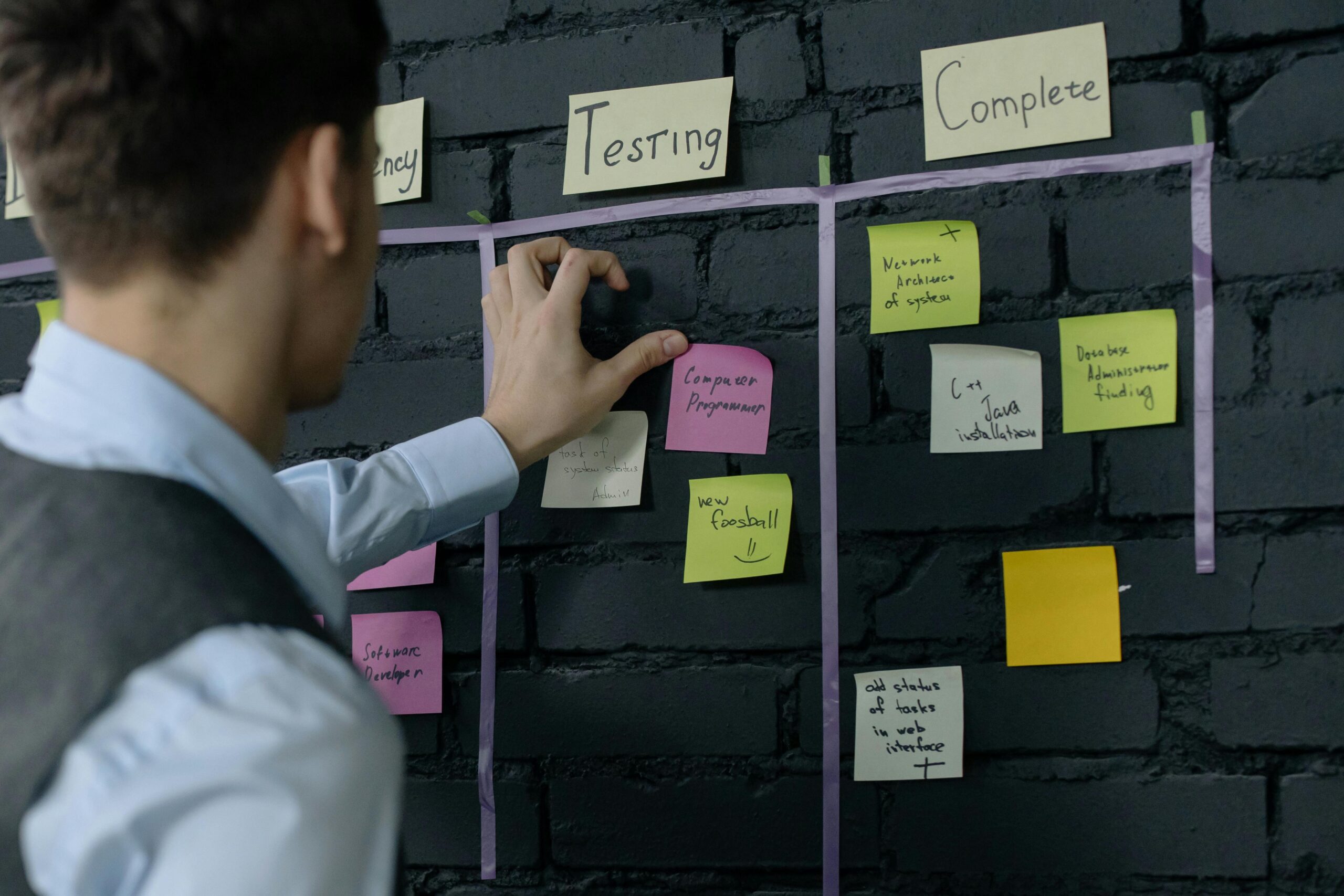
Human-in-the-loop automation is transforming how businesses operate, merging artificial intelligence capabilities with human expertise to create unprecedented levels of efficiency and accuracy.

In today’s rapidly evolving digital landscape, organizations face a critical challenge: how to harness the power of automation while maintaining the irreplaceable value of human judgment and creativity. The answer lies in a revolutionary approach that combines the best of both worlds—human-in-the-loop (HITL) automation. This innovative methodology is reshaping workflows across industries, from manufacturing and healthcare to customer service and content moderation, creating systems that are not only faster and more efficient but also more intelligent and adaptable.
The traditional approach to automation often created a stark division between fully manual processes and completely automated systems. However, this binary thinking overlooked a crucial reality: many complex tasks require both computational power and human nuance. Human-in-the-loop automation bridges this gap, creating a collaborative ecosystem where machines handle repetitive, data-intensive tasks while humans provide oversight, make critical decisions, and handle exceptions that require contextual understanding.
🤖 Understanding the Foundation of Human-in-the-Loop Automation
Human-in-the-loop automation represents a paradigm shift in how we conceptualize the relationship between humans and machines in the workplace. Unlike traditional automation that seeks to eliminate human involvement entirely, HITL systems are designed with human participation as an integral component of the workflow. This approach recognizes that while artificial intelligence and machine learning have made remarkable advances, they still lack the contextual awareness, ethical reasoning, and creative problem-solving capabilities that humans naturally possess.
At its core, HITL automation operates on a simple yet powerful principle: automated systems handle routine tasks with speed and consistency, while humans intervene at strategic points to validate results, make judgment calls, and train the system to improve over time. This creates a virtuous cycle where automation increases efficiency, human feedback enhances accuracy, and the combined system becomes progressively more intelligent and reliable.
The Three Essential Components of HITL Systems
Every effective human-in-the-loop automation system incorporates three fundamental elements that work in harmony to deliver superior results. Understanding these components helps organizations design and implement HITL solutions that maximize both efficiency and effectiveness.
- Automated Processing Engine: The AI or machine learning system that performs the bulk of routine tasks, analyzes data, and generates initial outputs based on predefined algorithms and learned patterns.
- Human Touchpoints: Strategic intervention points where human experts review, validate, correct, or approve automated decisions, particularly for edge cases, high-stakes scenarios, or situations requiring contextual judgment.
- Feedback Mechanisms: Systems that capture human decisions and corrections, feeding this information back into the automated engine to continuously improve its performance and accuracy over time.
💡 Real-World Applications Transforming Industries
The practical applications of human-in-the-loop automation span virtually every sector of the modern economy. By examining how different industries implement HITL systems, we can better understand the versatility and transformative potential of this approach.
Healthcare: Enhancing Diagnostic Accuracy and Patient Care
In healthcare settings, HITL automation is revolutionizing diagnostic processes and treatment planning. Medical imaging analysis provides a compelling example: AI algorithms can rapidly scan thousands of X-rays, MRIs, and CT scans, flagging potential abnormalities for radiologist review. The AI handles the time-consuming task of initial screening, while experienced physicians focus their expertise on interpreting flagged cases, making final diagnoses, and determining treatment plans. This collaboration not only accelerates diagnosis but also reduces the likelihood of human error caused by fatigue or oversight.
Patient monitoring systems similarly benefit from HITL approaches. Automated sensors continuously track vital signs and alert healthcare providers when readings fall outside normal parameters. Nurses and doctors then apply their clinical judgment to interpret these alerts within the broader context of each patient’s condition, medical history, and current treatment protocol. The result is faster response times combined with more nuanced, personalized care.
Content Moderation: Balancing Scale with Contextual Sensitivity
Social media platforms and online communities face the enormous challenge of moderating billions of user-generated content pieces while maintaining community standards and respecting free expression. HITL automation has become essential to this effort. Machine learning algorithms screen content at scale, identifying potential violations based on keywords, image recognition, and behavioral patterns. Human moderators then review flagged content, making nuanced decisions about context, intent, and cultural considerations that algorithms struggle to understand.
This hybrid approach allows platforms to maintain safer online environments without requiring impossibly large moderation teams. It also helps train AI systems to recognize subtle distinctions—such as the difference between hate speech and discussion about hate speech—that are crucial for fair and effective content policies.
Financial Services: Fraud Detection and Risk Assessment
Banks and financial institutions employ HITL automation extensively in fraud detection and prevention. Automated systems analyze transaction patterns in real-time, identifying anomalies that might indicate fraudulent activity. When suspicious transactions are detected, human fraud analysts investigate further, considering factors like customer history, transaction context, and emerging fraud trends that may not yet be fully incorporated into algorithmic models.
This collaboration is particularly valuable because financial fraud constantly evolves. Criminals develop new techniques, and purely automated systems may lag in recognizing novel attack patterns. Human analysts spot these emerging threats and feed their insights back into the system, enabling rapid adaptation to new fraud vectors while maintaining the speed necessary to protect customers effectively.
🚀 The Efficiency Multiplier Effect
The true power of human-in-the-loop automation lies not simply in combining human and machine capabilities but in how this combination creates exponential efficiency gains that exceed what either could achieve independently. This multiplier effect manifests in several distinct ways that transform organizational productivity.
Speed Without Sacrificing Quality
Traditional automation prioritizes speed but often sacrifices quality when encountering edge cases or complex scenarios. Purely manual processes maintain quality but cannot scale efficiently. HITL automation resolves this tension by processing routine cases at machine speed while routing exceptional cases to human experts. Organizations report processing volume increases of 300-500% while simultaneously improving accuracy rates, a combination previously thought impossible.
Continuous Improvement Through Active Learning
Perhaps the most compelling advantage of HITL systems is their capacity for continuous improvement. Every human intervention becomes a training opportunity for the automated component. When a human corrects an AI decision, that correction feeds back into the machine learning model, making it smarter and more accurate. Over time, the system requires fewer human interventions for routine cases while becoming better at identifying situations that genuinely require human judgment.
This creates a positive feedback loop: as the AI improves, humans spend less time on routine validations and more time on complex problem-solving and strategic thinking. The automation handles an increasing percentage of cases autonomously, while the cases escalated to humans become more genuinely challenging and valuable for further system refinement.
⚙️ Designing Effective HITL Workflows
Implementing successful human-in-the-loop automation requires thoughtful workflow design that optimizes the interaction between automated and human elements. Organizations that approach HITL implementation strategically achieve far better results than those who simply add human review steps to existing automation.
Identifying Optimal Intervention Points
Not all process steps benefit equally from human involvement. Effective HITL design begins with careful analysis to identify where human judgment adds the most value. High-stakes decisions, situations requiring contextual understanding, creative problem-solving, and cases involving ethical considerations are typically excellent candidates for human intervention. Conversely, data validation, pattern matching, calculation, and other rule-based tasks generally belong in the automated domain.
The goal is to create workflows where humans work on tasks that leverage uniquely human capabilities—empathy, ethical reasoning, creative thinking, and complex judgment—while machines handle speed, scale, consistency, and computational analysis. This alignment ensures both humans and machines operate in their areas of strength.
Building Intuitive Human Interfaces
The effectiveness of HITL systems depends heavily on interface design. Human reviewers need clear, actionable information presented in ways that support quick, accurate decision-making. This includes relevant context, AI confidence scores, historical data, and suggested actions. Well-designed interfaces reduce cognitive load, minimize decision fatigue, and enable humans to process review tasks efficiently without sacrificing judgment quality.
Progressive organizations invest significantly in user experience design for their HITL interfaces, recognizing that even small improvements in how information is presented can dramatically impact throughput and accuracy. Features like keyboard shortcuts, customizable dashboards, and intelligent case prioritization help human reviewers work more efficiently and effectively.
📊 Measuring Success and ROI
Quantifying the benefits of human-in-the-loop automation requires metrics that capture both efficiency gains and quality improvements. Organizations should track multiple dimensions of performance to understand the full impact of their HITL implementations.
| Metric Category | Key Indicators | Business Impact |
|---|---|---|
| Processing Efficiency | Cases processed per hour, automation rate, time-to-completion | Increased throughput, reduced operational costs |
| Quality Metrics | Accuracy rate, error reduction, customer satisfaction scores | Improved outcomes, reduced rework, enhanced reputation |
| System Learning | Automation improvement rate, human intervention frequency trends | Continuous efficiency gains, reduced long-term costs |
| Human Experience | Employee satisfaction, decision fatigue indicators, skill development | Better retention, higher morale, workforce capability growth |
Successful HITL implementations typically demonstrate ROI within 6-12 months through a combination of increased processing capacity, improved accuracy, and reduced error costs. However, the long-term value often exceeds initial projections as continuous learning effects compound and organizational capabilities expand.
🎯 Overcoming Implementation Challenges
While the benefits of human-in-the-loop automation are substantial, organizations frequently encounter challenges during implementation. Anticipating and addressing these obstacles increases the likelihood of successful adoption and sustained value creation.
Change Management and Cultural Adaptation
Introducing HITL automation often requires significant cultural shifts. Employees may fear that automation threatens their jobs, or conversely, they may resist additional responsibility for training and correcting AI systems. Effective change management addresses these concerns through transparent communication about how HITL enhances rather than replaces human work, emphasizing how automation handles tedious tasks while elevating humans to more strategic, fulfilling roles.
Organizations that successfully implement HITL systems invest in comprehensive training programs that help employees understand their new roles as AI collaborators and supervisors. They celebrate examples of how human expertise improves system performance and recognize employees who contribute valuable feedback that enhances automation effectiveness.
Data Quality and System Training
HITL automation systems are only as good as the data they learn from. Poor initial training data or inconsistent human feedback can undermine system performance and create frustration for both users and stakeholders. Establishing clear decision criteria, providing comprehensive training to human reviewers, and implementing quality assurance processes for human inputs are essential for system success.
Regular calibration sessions where human reviewers discuss edge cases and align on decision-making approaches help maintain consistency and improve the quality of feedback flowing into the automated system. This investment in human reviewer training pays dividends in system performance and reliability.
🌟 The Future of Collaborative Intelligence
As artificial intelligence continues to advance, the relationship between humans and automated systems will evolve in fascinating ways. Rather than moving toward full automation, many experts predict that human-in-the-loop approaches will become more sophisticated and prevalent across an expanding range of applications.
Emerging technologies like explainable AI will make it easier for humans to understand why automated systems make particular decisions, enabling more informed oversight and more effective feedback. Advanced natural language interfaces will make human-AI collaboration more intuitive and conversational. Augmented reality and immersive technologies may create entirely new paradigms for how humans interact with and guide automated processes.
The organizations that thrive in this future will be those that view humans and machines not as competitors but as complementary partners, each contributing their unique strengths to achieve outcomes neither could accomplish alone. Human-in-the-loop automation represents not a transitional phase toward full automation but rather a mature model for sustainable, ethical, and effective use of AI in human contexts.

✨ Building Your HITL Strategy for Lasting Impact
Organizations ready to embrace human-in-the-loop automation should approach implementation strategically, starting with well-defined use cases that offer clear value and manageable complexity. Beginning with a pilot project allows teams to learn, refine processes, and demonstrate value before scaling more broadly.
Success requires commitment across multiple dimensions: technology infrastructure that supports seamless human-AI interaction, process design that optimizes the division of labor between humans and machines, training programs that prepare employees for new roles, and measurement systems that track both efficiency and quality outcomes. Most importantly, it requires a culture that values collaboration, continuous improvement, and the unique contributions both humans and machines bring to solving complex challenges.
The revolution in efficiency that human-in-the-loop automation enables is not about choosing between human capability and machine power—it’s about unlocking the exponential potential that emerges when both work together seamlessly. Organizations that master this collaboration will find themselves not just more efficient but more adaptable, more innovative, and better positioned to thrive in an increasingly complex and dynamic business environment. The future belongs to those who recognize that the smartest automation isn’t about eliminating humans from the loop—it’s about putting them exactly where they add the most value.