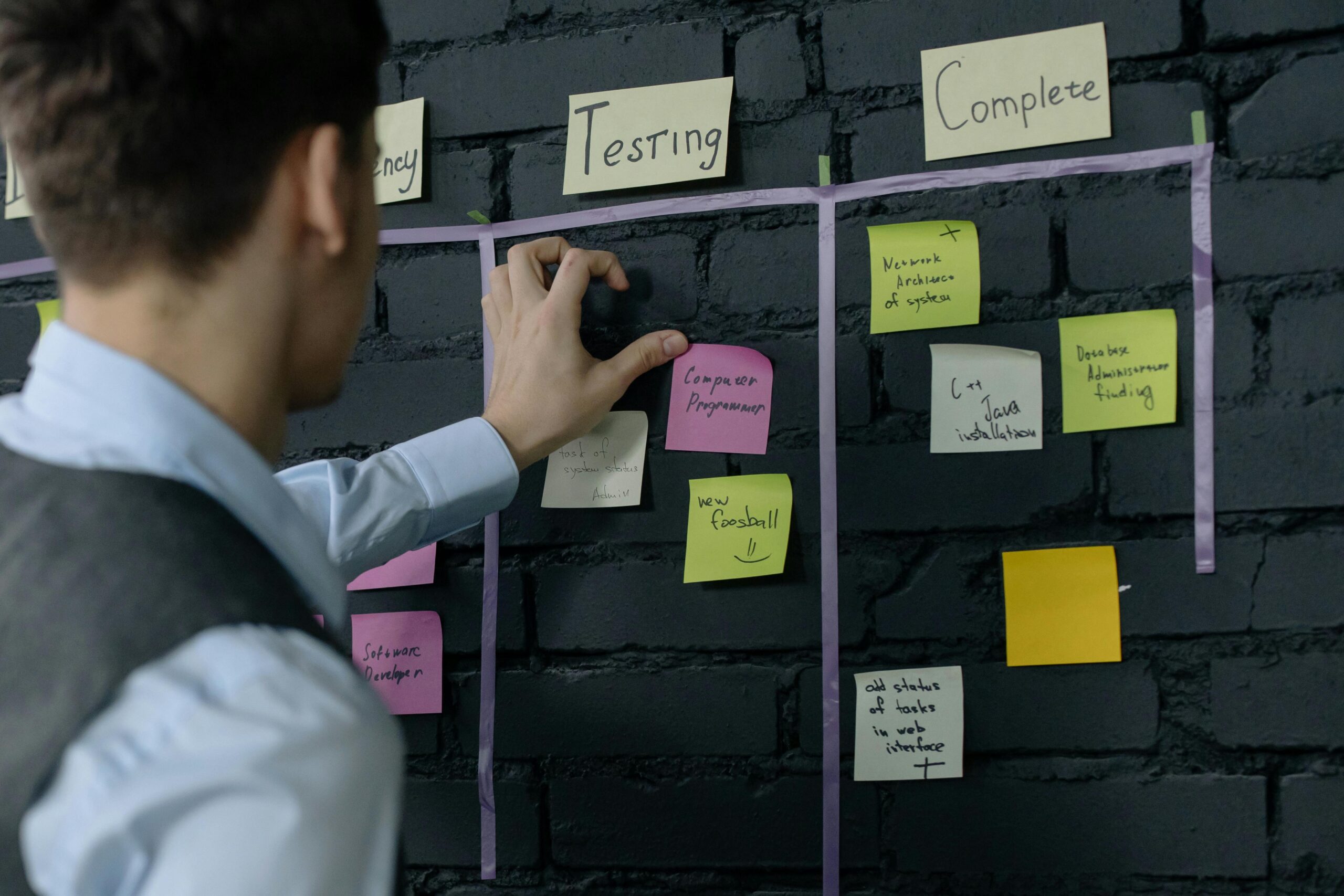
Sustainable personal scaling isn’t about doing more—it’s about growing smarter, with intention, and creating a life where success and balance coexist harmoniously.

In today’s hyper-connected world, the pressure to scale, grow, and achieve more never seems to cease. We’re bombarded with messages about productivity hacks, morning routines of successful people, and the relentless pursuit of excellence. Yet, beneath all this noise lies a fundamental question: How can we grow sustainably without burning out, losing ourselves, or sacrificing the very things that make life meaningful?
Personal scaling with purpose represents a paradigm shift from the traditional “hustle culture” mentality. It’s about strategic expansion of your capabilities, influence, and impact while maintaining—or even improving—your quality of life. This approach recognizes that true success isn’t measured solely by external achievements but by the alignment between your actions, values, and overall well-being.
🎯 Understanding Purposeful Growth vs. Reckless Expansion
The difference between purposeful growth and reckless expansion is like the difference between a well-tended garden and wild overgrowth. Both involve growth, but only one is sustainable, intentional, and yields the fruits you actually want to harvest.
Reckless expansion often manifests as saying yes to every opportunity, working longer hours without strategic focus, and measuring success purely by quantity—more clients, more projects, more revenue, more followers. This approach might deliver short-term wins, but it inevitably leads to diminishing returns, exhaustion, and a gnawing sense that you’re not actually moving toward what matters most.
Purposeful growth, conversely, starts with clarity about your core values, long-term vision, and the life you want to create. It asks: What kind of success do I actually want? What does balance look like for me? How can I expand my impact without compromising my health, relationships, or integrity?
The Foundation: Defining Your Personal North Star
Before you can scale anything sustainably, you need absolute clarity on your direction. Your personal North Star serves as the guiding principle for all growth decisions. This isn’t just about career goals—it encompasses your values, desired lifestyle, relationship priorities, health objectives, and contribution to the world.
Consider creating a personal mission statement that captures your essence and aspirations. This living document should answer questions like: What unique value do I bring to the world? What legacy do I want to create? What experiences and relationships matter most to me? When is success not worth the sacrifice?
🌱 The Four Pillars of Sustainable Personal Scaling
Sustainable personal growth rests on four interconnected pillars that support each other and create a stable foundation for expansion. Neglecting any single pillar compromises the entire structure.
1. Energy Management Over Time Management
Traditional productivity advice focuses obsessively on time management, but time is the ultimate egalitarian resource—everyone gets the same 24 hours. The true differentiator is energy management. Your capacity to do meaningful work, make good decisions, and maintain relationships depends on your physical, mental, emotional, and spiritual energy levels.
Sustainable scaling requires that you protect and optimize your energy sources. This means prioritizing sleep, nutrition, and movement not as luxuries but as non-negotiable investments in your capacity. It means learning your natural rhythms and scheduling high-stakes work during your peak energy windows. It means saying no to energy vampires—activities, commitments, and even people that drain more than they contribute.
Track your energy patterns for two weeks. Note when you feel most creative, focused, and energized versus when you’re sluggish or scattered. Use these insights to design your ideal day and week structure around your natural energy architecture rather than arbitrary schedules.
2. Strategic Leverage and Multiplication
Scaling sustainably isn’t about working more hours—it’s about creating systems, relationships, and assets that multiply your impact without multiplying your effort proportionally. This is the essence of leverage.
There are several forms of leverage you can develop: technological leverage through automation and digital tools, people leverage through delegation and collaboration, financial leverage through smart investments, and knowledge leverage through expertise that compounds over time. The key is identifying which forms of leverage align with your strengths and goals.
Ask yourself regularly: What am I currently doing that could be systematized, automated, delegated, or eliminated entirely? Where am I trading time for money when I could create assets that generate value repeatedly? What skills or knowledge, once mastered, would create exponential returns?
3. Intentional Boundary Architecture
Boundaries aren’t walls that isolate you—they’re the container that allows you to scale without losing yourself. Without clear boundaries, growth becomes cancerous, spreading into every corner of your life and crowding out what matters most.
Effective boundary architecture includes time boundaries (work hours, availability, meeting limits), emotional boundaries (what you will and won’t absorb from others), relational boundaries (how you show up in different relationships), and value boundaries (what opportunities you accept based on alignment with your principles).
The most successful sustainable scalers are masters at protecting their boundaries while remaining flexible and responsive. They understand that every yes to something is a no to something else, and they choose their yeses with ruthless intention.
4. Regenerative Practices and Renewal
Nature doesn’t grow continuously—it operates in cycles of growth, harvest, rest, and regeneration. Sustainable personal scaling must honor these natural rhythms. Regenerative practices ensure that your growth doesn’t deplete your reserves but actually strengthens your foundation.
This includes daily renewal practices like meditation, journaling, or walks in nature; weekly practices like a designated rest day or deep reflection time; quarterly practices like retreats or comprehensive reviews; and annual practices like sabbaticals or major life audits. These aren’t indulgences—they’re essential maintenance for sustainable high performance.
⚖️ Balancing Ambition with Sustainable Wellbeing
One of the greatest challenges in personal scaling is maintaining the tension between healthy ambition and sustainable wellbeing. These aren’t opposites—they’re dance partners that must move in harmony.
Healthy ambition drives you toward meaningful goals, pushes you beyond comfort zones, and fuels innovation and impact. Sustainable wellbeing provides the foundation, resilience, and longevity required to achieve those goals without self-destruction. The sweet spot is ambitious sustainability—setting stretch goals while designing the lifestyle and systems that make them achievable without burnout.
Warning Signs You’re Scaling Unsustainably
Recognizing when you’ve crossed from sustainable growth into dangerous territory is crucial. Common warning signs include chronic fatigue despite adequate sleep, increasing cynicism or resentment toward your work, deteriorating relationships, persistent health issues, inability to enjoy accomplishments, decision fatigue, and a nagging feeling that you’re running on a hamster wheel.
If you notice these patterns, it’s time to pause, reassess, and recalibrate. This isn’t failure—it’s wisdom. The most successful long-term players know when to ease off the accelerator, make adjustments, and recommit to sustainable practices.
🔧 Practical Systems for Sustainable Scaling
Theory matters, but systems make the difference. Here are practical approaches to embed sustainable scaling into your daily reality.
The Energy Audit Framework
Conduct quarterly energy audits where you evaluate all major commitments, relationships, and activities across four dimensions: Does this energize or drain me? Is this aligned with my core values and goals? Could this be done differently, delegated, or eliminated? What is the true opportunity cost of continuing this?
Based on this audit, create a three-category system: Protect (double down on high-value, energizing activities), Optimize (maintain but improve efficiency), and Prune (phase out or delegate low-value drains). This ensures your time and energy allocation evolves with your growth rather than accumulating legacy commitments.
The 3-Horizon Planning Model
Borrowed from business strategy but powerful for personal scaling, this model asks you to simultaneously manage three horizons: Horizon 1 is your current core—what’s working now and needs maintaining. Horizon 2 is emerging opportunities—experiments and growing initiatives that might become tomorrow’s core. Horizon 3 is future possibilities—early-stage exploration and learning that might become relevant in 2-3 years.
Sustainable scalers allocate resources across all three horizons: roughly 70% to Horizon 1, 20% to Horizon 2, and 10% to Horizon 3. This ensures current stability while building future capacity and options.
The Weekly Design Session ✨
Dedicate 60-90 minutes each week to intentionally design the week ahead rather than reactively responding to whatever arrives. Review your commitments through the lens of your North Star values. Identify your top three non-negotiable priorities. Schedule your energy peaks for your most important work. Proactively protect time for rest, relationships, and regeneration. Anticipate potential derailers and create contingency plans.
This practice transforms you from victim of circumstance to architect of experience. Over time, this weekly discipline compounds into a dramatically different life trajectory.
📈 Scaling Your Impact Without Scaling Your Stress
The ultimate goal of sustainable personal scaling is expanding your positive impact on the world without proportionally expanding your stress, time commitment, or energy depletion. This requires shifting from a linear model (more impact = more effort) to an exponential model (more impact = better systems, leverage, and alignment).
Building Your Personal Flywheel
A flywheel is a mechanism that stores rotational energy—initially requiring significant effort to start spinning but gradually requiring less input while maintaining or increasing momentum. Your personal flywheel consists of activities that generate compounding returns over time.
Examples include: building genuine relationships that create opportunities without constant networking, developing expertise that attracts clients rather than chasing them, creating content or systems that deliver value repeatedly without additional effort, investing in health that increases energy and longevity, and cultivating reputation that opens doors automatically.
Identify the 2-3 flywheel activities most aligned with your goals and consistently invest in spinning them. Early stages feel slow and effortful, but patience yields remarkable results as momentum builds.
The Art of Strategic Subtraction
Counterintuitively, sustainable scaling often requires becoming excellent at subtraction. Every time you add something new without removing something old, you increase complexity, cognitive load, and stress. The most sustainable scalers are ruthless editors of their lives.
Practice regular subtraction exercises: What commitment can I exit? What meeting can I decline? What process can I simplify? What possession can I release? What belief is no longer serving me? What relationship needs to evolve or end? These questions create space for what matters most.
🤝 Leveraging Community and Collaboration
Sustainable scaling is rarely a solo endeavor. Building the right community and collaboration structures multiplies your capacity while distributing the load.
Identify your core support team across different life domains: accountability partners who help you maintain commitments, mentors who provide wisdom from experience, peers who share the journey and exchange insights, and specialists who provide expertise you lack. This team doesn’t need to be formal—it’s a constellation of relationships that collectively support your sustainable growth.
Look for collaboration opportunities that create win-win outcomes—where combining forces produces results neither party could achieve alone while requiring less individual effort than separate pursuits. This might include skill exchanges, resource sharing, co-creation projects, or mutual promotion arrangements.
🧭 Measuring Success in Sustainable Scaling
What gets measured gets managed, but choosing the right metrics determines whether you’re managing what actually matters. Traditional success metrics—revenue, titles, followers, possessions—often fail to capture the essence of sustainable, balanced growth.
Consider expanding your success dashboard to include: energy levels and vitality, quality of key relationships, alignment between actions and values, capacity for presence and enjoyment, resilience in facing challenges, growth in wisdom and self-awareness, and positive impact on others. These qualitative measures provide a more complete picture of whether you’re truly scaling sustainably.
The Monthly Reflection Practice
Set aside time each month to honestly assess your trajectory across multiple dimensions. Ask: Am I growing in the directions that matter most to me? Is my life becoming more or less aligned with my values? Am I energized or depleted by my current path? What small adjustments would create significant positive shifts? What am I learning about myself and what I need?
These reflections prevent you from waking up years down the road having climbed the ladder successfully only to discover it was leaning against the wrong wall.

💡 Sustaining the Journey Long-Term
Sustainable personal scaling isn’t a destination—it’s an ongoing practice of alignment, adjustment, and renewal. The strategies that work brilliantly in one season of life may need evolution as circumstances change, as you grow, and as the world shifts around you.
Embrace a growth mindset that views challenges as feedback rather than failure. When something isn’t working, get curious rather than critical. What is this experience teaching me? How can I adjust my approach? What support or resources might help? What assumption needs questioning?
Remember that sustainable scaling is fundamentally about creating a life you don’t need to escape from—where success and balance aren’t competing priorities but integrated realities. It’s about building capacity that serves not just your career but your entire life ecosystem. It’s about growing in ways that make you more rather than less human.
The journey of mastering sustainable personal scaling is one of the most worthwhile investments you can make. It transforms growth from a depleting sprint into a regenerative marathon, from a zero-sum game into an abundant expansion, from an either-or dilemma into a both-and integration. When you empower your growth with genuine purpose, you don’t just achieve more—you become more, while maintaining the balance that makes success actually meaningful.
Start where you are. Choose one pillar, one practice, one small adjustment that aligns with sustainable scaling. Implement it consistently. Notice the difference it makes. Then add another. Over time, these small intentional choices compound into a dramatically different trajectory—one where you expand your impact, deepen your fulfillment, and maintain the balance that makes the entire journey worthwhile.